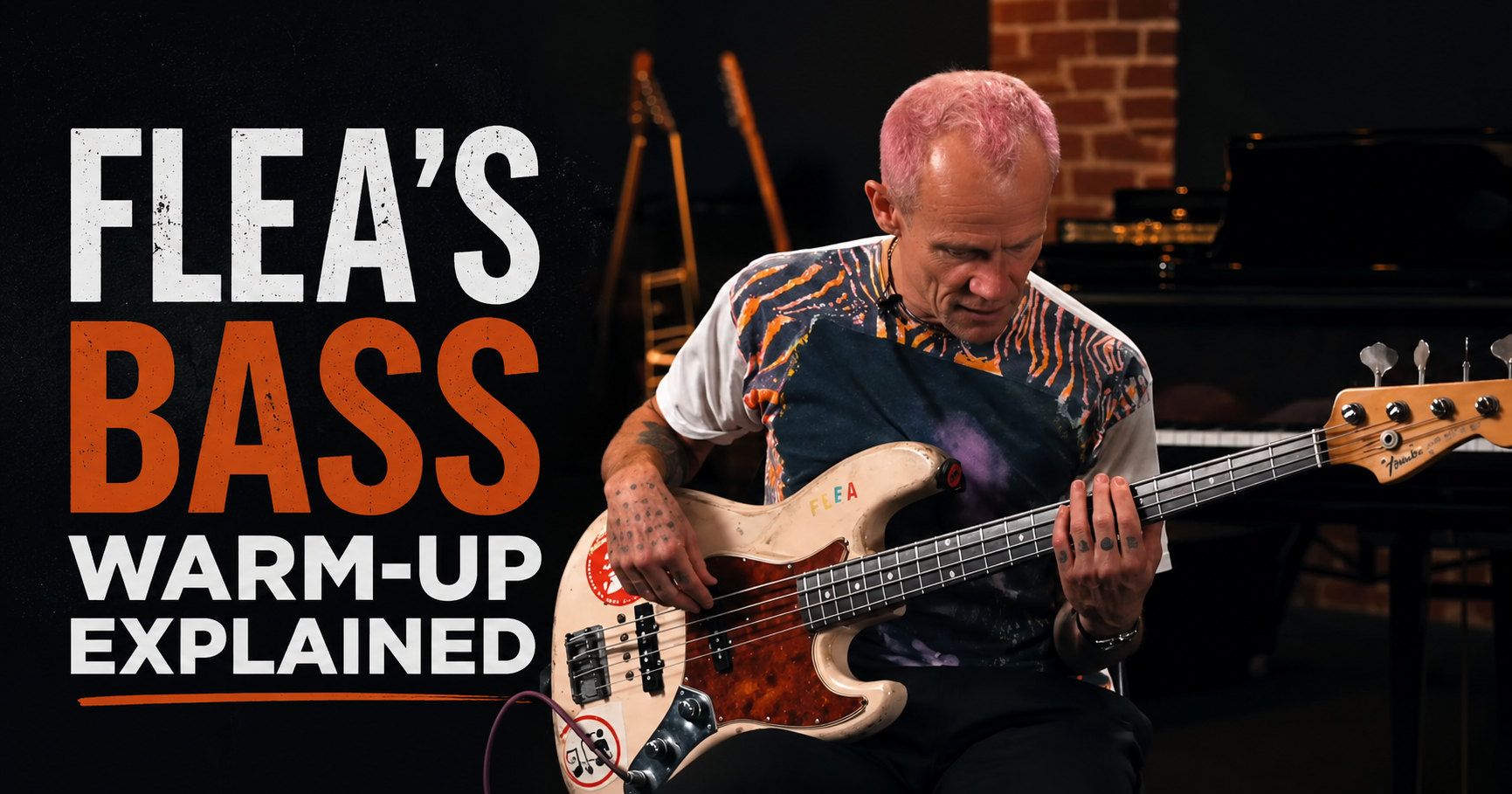
Flea’s bass warm-up explained
Flea’s favourite bass warm-up exercises
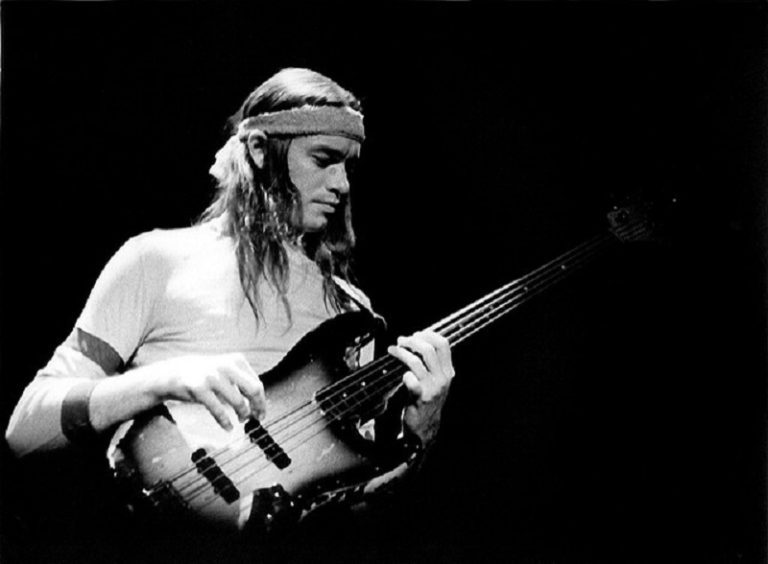
A student recently advised that I should watch Rick Beato’s excellent interview with Flea (in my head, they should’ve titled it Rick Fleato). The part that really grabbed my attention was Flea’s demonstration of his practice routine. Flea starts by talking about his main bass, a 1961 Fender Jazz, along with the slightly bizarre story of how he got hold of it.
Flea’s then demonstrates the warm-up exercises that form the basis of his daily practice routine. The first set of exercises involve playing the major scale in different groupings of notes (known as “scale sequencing” – there’s a deeper dive into this topic in this video).
Flea’s daily scale sequencing drills:
Before we get started, a note on technique: In the video, Flea plays all of these exercises using a 1-finger-per-fret approach with his left hand; this is something I don’t use – or recommend to my students – because it’s not strictly necessary, particularly in the lower areas of the fretboard. I’d suggest using the 1-2-4 fingering system (also known as “Simandl fingering”) instead, as it allows me to play with less tension and strain in the fretting hand.
This doesn’t mean I’m attacking one of the most respected bass players of the last 40 years or saying that he has bad technique. What I’m saying is that Flea might have succeeded in spite of his technique, not because of it. And, since neither you or I are Flea, we can use our own judgement as far as what feels best for our hands.
I’ve also taken the liberty of extending all of the exercises past the octave, running them up to the highest practical note in each position before descending.
Warm-up exercise 1: F# Major Scale in groups of 3
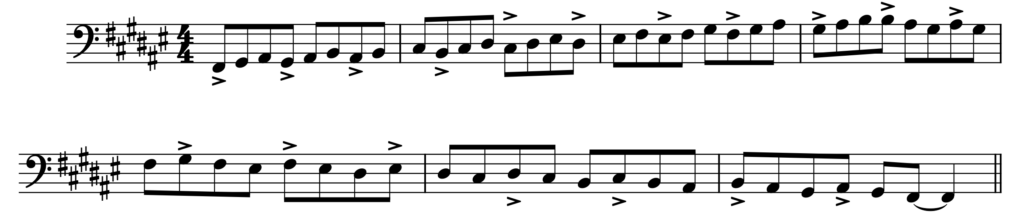
Warm-up exercise 2: G Major Scale in groups of 4

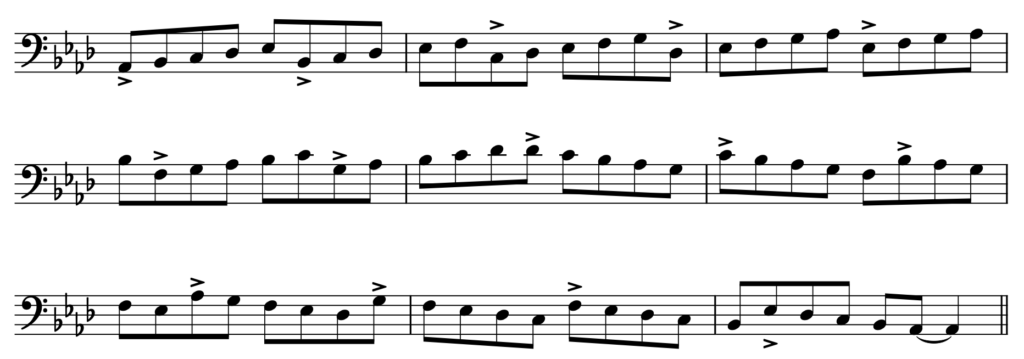
Warm-up exercise 3: Ab Major Scale in groups of 5
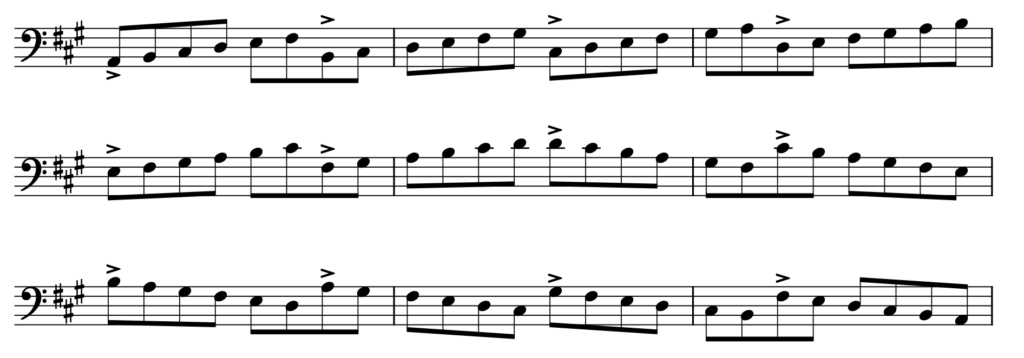
Warm-up exercise 4: A Major Scale in groups of 6
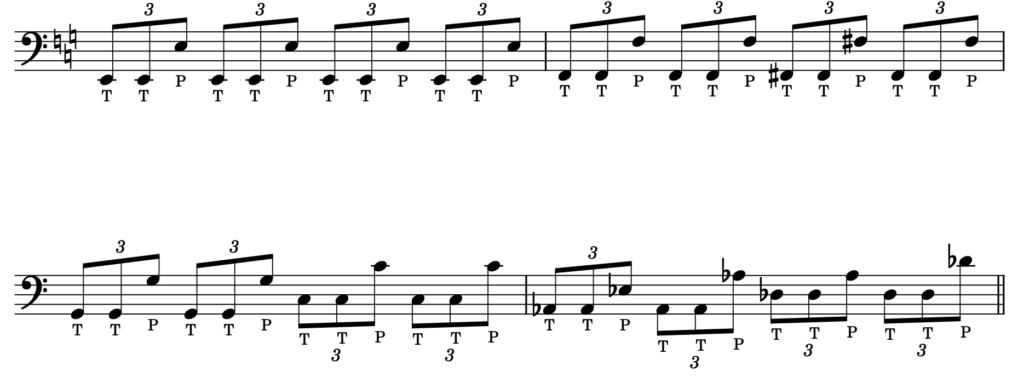
Warm-up exercise 5: Slap/pop exercise in octaves and 5ths
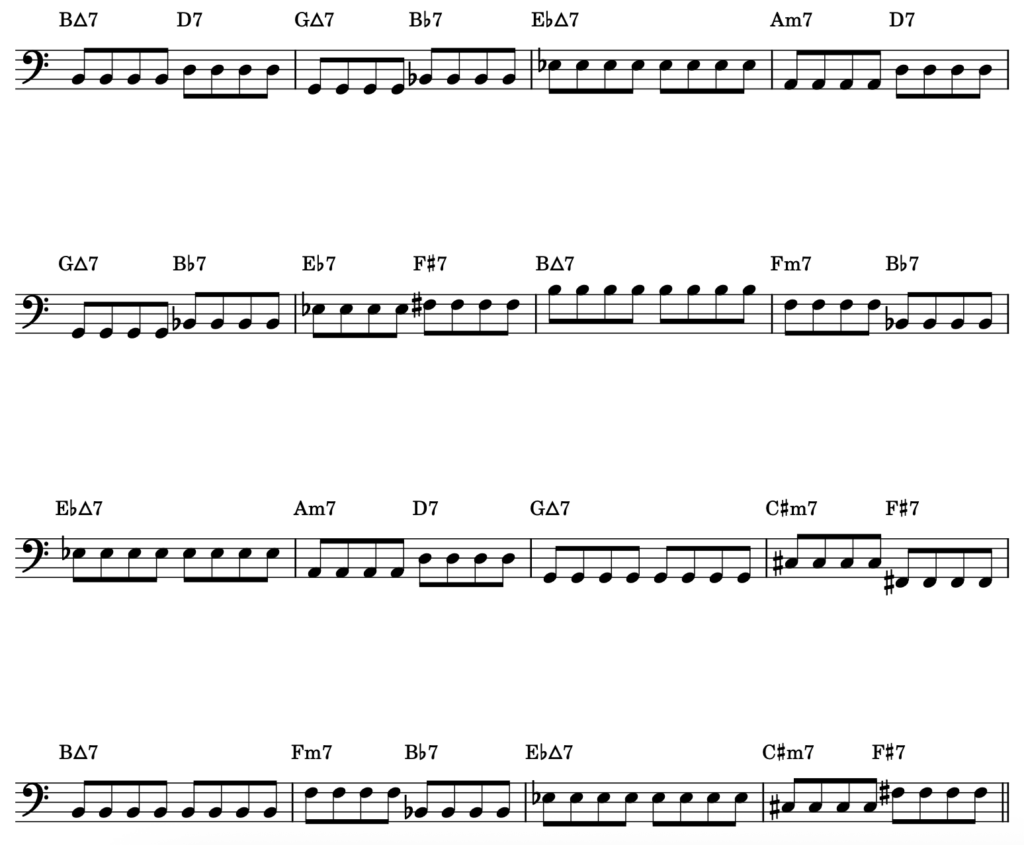
Warm-up exercise 6: Punk rock “Giant Steps”
This part of the interview really made me smile; I didn’t realise the extent to which Flea grew up around jazz and I love the idea of a punk rock take on one of the toughest standards. Can’t recall the changes to Coltrane’s “Giant Steps”? I’ve got you covered:
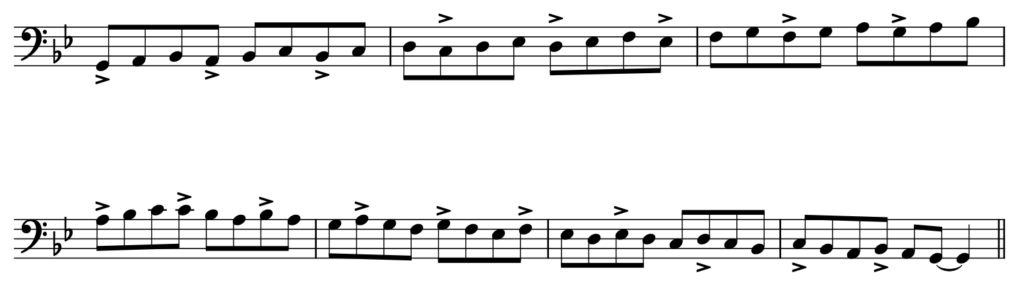
Warm-up exercise 7: G natural minor, groups of three
Flea then returns to more scale sequencing exercises, detailing that he plays minor scales in groups of three, four, and five notes before demostrating the G natural minor scale (also called the G aeolian mode) in groups of three:
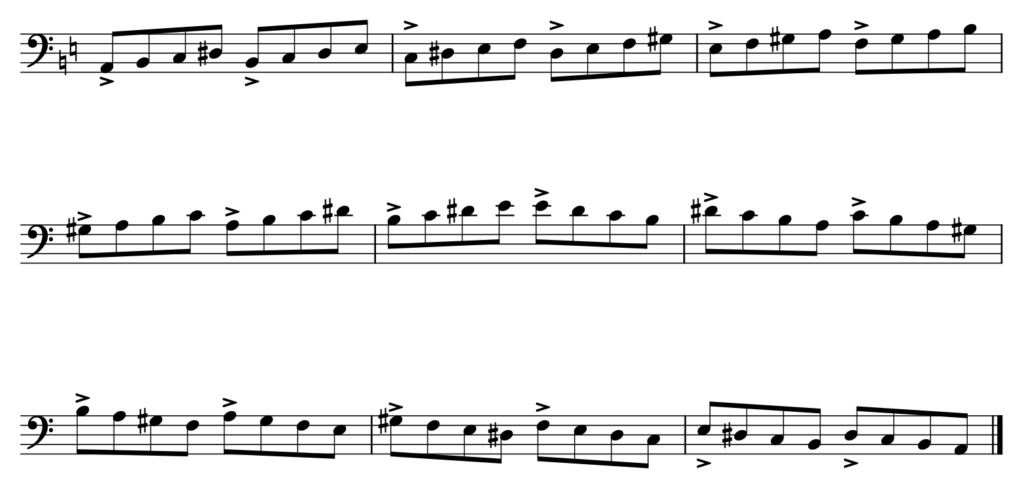
Warm-up exercise 8: A Hungarian minor, groups of four
Don’t panic if you don’t know what on Earth the “Hungarian minor” scale is off the top of your head – after 26 years of playing bass and 18 years working as a professional musician I had to look it up.
The Hungarian minor scale is like the harmonic minor scale, but with a raised 4th, which gives us this structure:
R – 2 – b3 – #4 – 5 – b6 – 7
This means that the Hungarian minor contains two augmented second intervals, so it’s essentially twice as exciting as the harmonic minor scale.
Want a PDF version of Flea’s warmup? Here you go!
Flea bass warmup exercises PDF
This post contains paid content.